
The Four Core Heat Treatment Processes in Metal Manufacturing
The Four Core Heat Treatment Processes in Metal Manufacturing
Industry News & Technical Insight — Heat treatment is an indispensable core process in mechanical manufacturing and metal processing, which fundamentally optimizes the mechanical properties of metal workpieces by adjusting internal microstructure. Among all thermal processing technologies, four basic and critical processes, known as the "Four Fundamental Heat Treatments", including annealing, normalizing, quenching and tempering, lay the foundation for high-quality metal component production. Despite following the unified procedure of heating, holding and cooling, the four processes deliver distinct mechanical performances due to different cooling rates and process parameters, serving diverse industrial application scenarios.
1. Annealing: Soften and Stabilize Metal Structures
Annealing features the slowest cooling rate among the four heat treatments. The standard process heats metal workpieces above the critical temperature, maintains the temperature for sufficient time to homogenize the internal structure, and then cools the parts slowly inside the furnace.
This thorough slow cooling completely eliminates residual internal stress and stabilizes the metal microstructure. After annealing, metal hardness is reduced while plasticity and toughness are significantly improved, making the material suitable for subsequent cutting, bending, stamping and other machining operations.
Widely applied in castings, forgings and welded components, annealing effectively prevents workpiece deformation and cracking, softens hard metal blanks, refines coarse grains, and prepares qualified base structures for further precision heat treatment. It is a conventional pretreatment for steel blanks, thick plates and large welded structural parts.
2. Normalizing: Refine Grains for Balanced Comprehensive Performance
Normalizing shares a similar heating procedure with annealing, with slightly higher heating temperature and shorter holding time. The key difference lies in the cooling method: normalized workpieces are taken out after heat preservation and cooled naturally in the air, with a cooling speed faster than annealing but slower than quenching.
The moderate cooling rate of normalizing refines metal grains and densifies the internal structure. Treated metals present slightly higher hardness and strength than annealed materials with well-maintained toughness, achieving balanced comprehensive mechanical properties. Meanwhile, normalizing boasts a shorter process cycle and lower production costs.
It can replace annealing for pretreatment of ordinary structural steel and low-carbon steel workpieces, improve coarse grains and uneven structures of medium-carbon steel and alloy steel, and enhance the wear resistance and impact resistance of cast and forged parts. This process is commonly used for manufacturing gears, shafts, bolts and other standard mechanical parts.
3. Quenching: Maximize Hardness and Wear Resistance
Quenching is the most effective process to improve metal hardness, adopting the fastest cooling rate in the four treatments. The process heats workpieces to the critical temperature, keeps the temperature for full structural transformation, and then rapidly cools the parts in cooling media such as water, oil or salt water.
Rapid cooling triggers internal phase transformation of metal, forming high-hardness martensite structures. Workpieces after quenching obtain drastically improved hardness, strength and wear resistance. However, drastic temperature change generates huge residual internal stress, making metals extremely brittle and prone to deformation and cracking. For this reason, quenching cannot be used independently and must be matched with tempering.
Quenching serves as the key strengthening pretreatment for high-performance workpieces requiring super hardness and wear resistance, including cutting tools, measuring tools, molds, bearings and high-strength shaft parts.
4. Tempering: Eliminate Brittleness and Stabilize Performance
As an essential supporting process for quenching, tempering is a low-temperature heat treatment. The procedure reheats quenched workpieces to a temperature below the critical point, holds the temperature for a certain period, and then cools the parts slowly through furnace cooling or air cooling.
Tempering removes residual stress generated by quenching, optimizes unstable quenched structures, and greatly enhances metal plasticity and toughness without sacrificing core hardness. It eliminates cracking risks and stabilizes the size and mechanical properties of workpieces, enabling metals to balance hardness and toughness perfectly.
Classified by heating temperature, tempering covers three types with targeted applications. Low-temperature tempering is applied to tools, measuring tools and bearings to retain ultra-high hardness and wear resistance. Medium-temperature tempering is used for springs and elastic components to boost elasticity and fatigue resistance. High-temperature tempering, combined with quenching, forms the classic quenching and tempering treatment, which is widely used for core stressed parts such as crankshafts, connecting rods and spindles to achieve high strength and toughness simultaneously.
Core Differences of the Four Heat Treatments
Annealing: Ultra-slow cooling, softens metals and relieves stress for easy machining;
Normalizing: Air cooling, refines grains and delivers balanced comprehensive performance;
Quenching: Rapid cooling, hardens and strengthens metals with residual brittleness and stress;
Tempering: Low-temperature modification, eliminates brittleness and stabilizes performance as a mandatory post-quenching process.
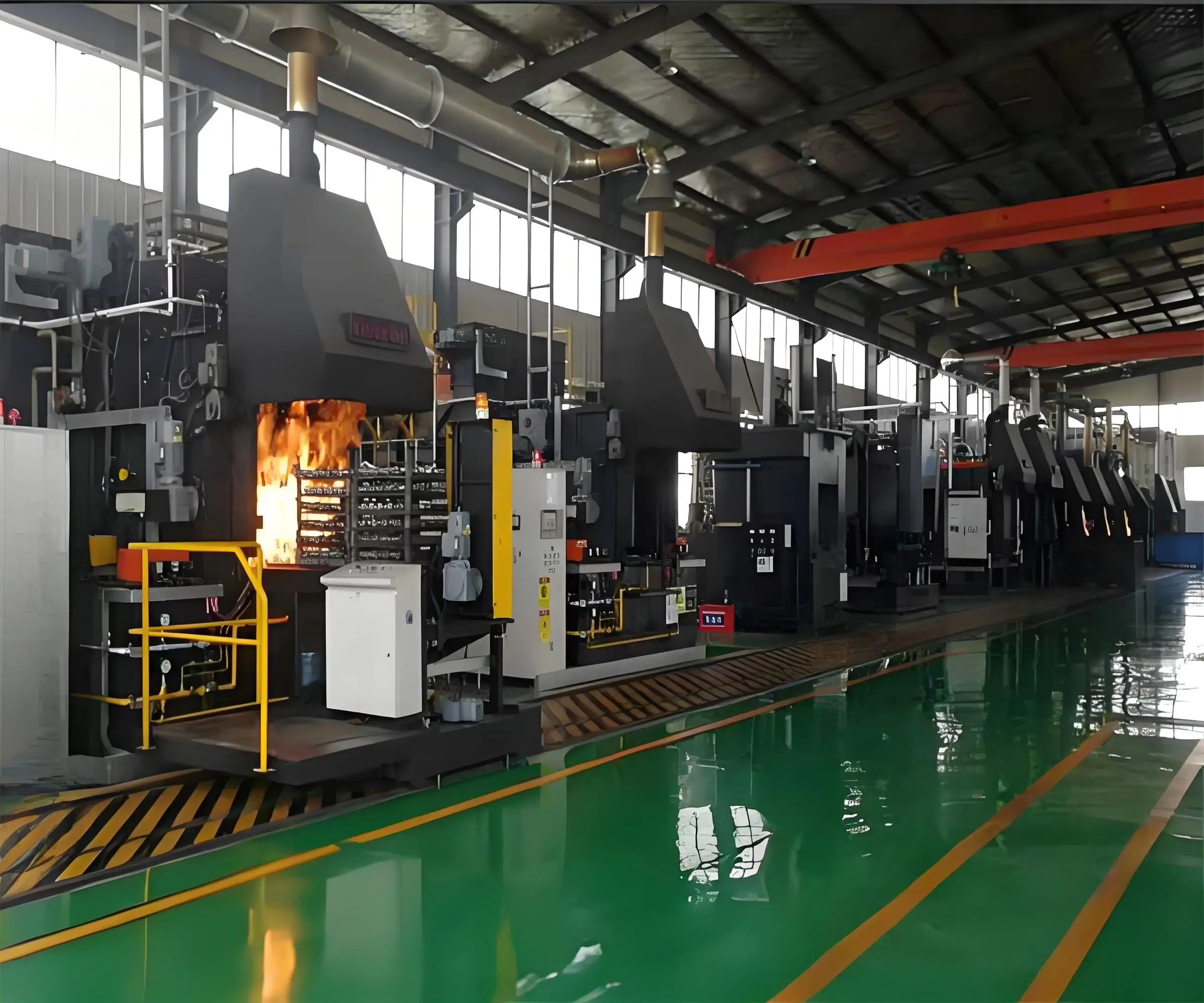
Image Description: Industrial heat treatment workshop scene, showing professional heating furnace and cooling equipment, with four groups of metal workpieces corresponding to annealing, normalizing, quenching and tempering processes. The picture intuitively presents the modern metal heat treatment production environment, matching the core technical content of the four basic heat treatment processes.
 Send Email
 Joseph
 184731149
 Joseph